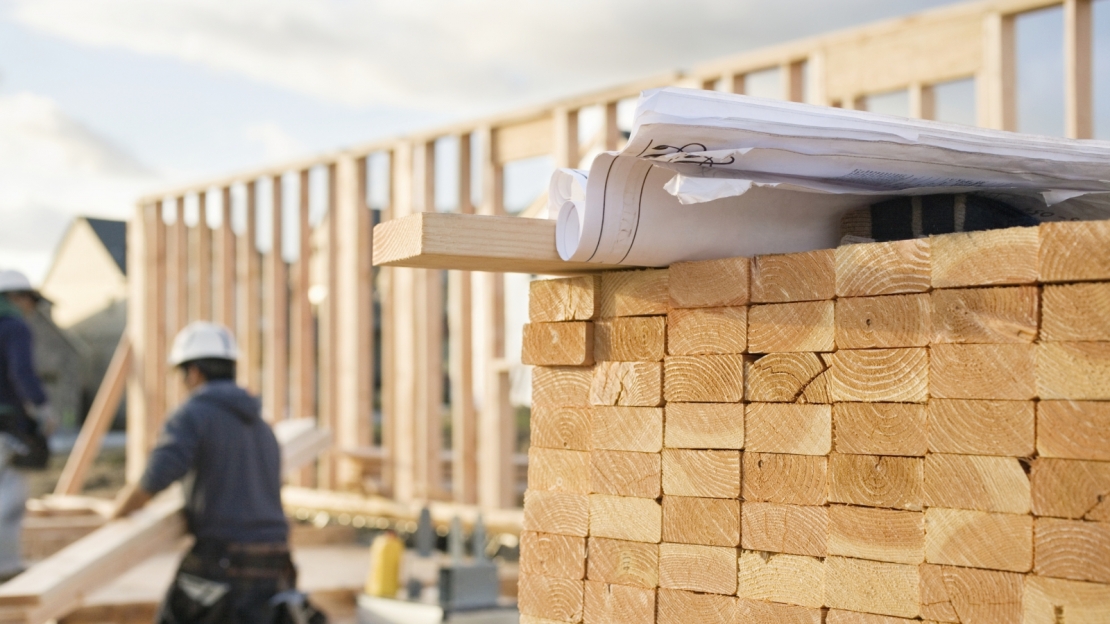
Buying a new home means signing a contract months before you get the keys: everything is decided before you sign, in the choice of developer, the warranties and what the contract says.
Becoming the owner of a new home is a milestone, especially when it is your first purchase. You compare floor plans, visit the model units, and already picture yourself in your new neighbourhood. But it is also a big decision, and it raises plenty of questions. At Homz, we closely follow the journey of buyers and developers alike, and one observation keeps coming back: information is plentiful, but scattered. Between the advice of friends and family, forums, social media and contradictory reviews, it becomes hard to know whom to trust. And to sign with confidence, you need solid landmarks.
That is why we put together this complete, step-by-step guide. It brings together expert advice, buyers' stories and the essentials of buying new, from comparing projects to the day you get the keys. Enough to start off on the right foot.
“We found that buying a new house cost almost the same, or even a little less, than a house someone had already lived in. We told ourselves we'd like to start our life together in something new, that we would make our own.”
— Ericka T.
Why buy new?
When it is time to buy a home, one key question comes up: new or existing? Here are the advantages and drawbacks of new construction, even though we are obviously preaching to our own choir.
Among the advantages of a new build:
- a warranty, mandatory for several types of buildings
- compliance with current quality standards, including soundproofing
- the assurance of having no work to do and no old defects to fix
- attractive home-ownership programs, such as the enhanced GST rebate for first-time buyers
- better energy efficiency
- the chance to customize your home
- up-to-date architecture and finishes
- new neighbourhoods to discover
That is what guides Éric R. with every purchase: “We have always preferred buying new properties and, for us, this project offered the best balance between quality of life, comfort and location.”
And the drawbacks? Not everything is rosy in the world of new homes. Among other things:
- a price that can be higher, notably because the GST and QST apply to new homes but not to existing ones (rebates do lighten the bill, though; see Financial considerations)
- construction quality that is sometimes lacking
- delivery delays

The added value of a green home
Does buying a passive solar or LEED-certified house give you better resale potential? According to Écohabitation, homes certified by an independent body (LEED, Novoclimat) resell faster and at a better price than comparable uncertified properties. Montreal developer André Roy, who has built hundreds of LEED-certified townhouses, believes this type of construction will stand the test of time, provided the building is well maintained: “It's better insulated, the windows perform better, so the building's lifespan should follow.” For lack of recent studies in Quebec, we can look elsewhere. In the United Kingdom, for example, a Rightmove analysis of 300,000 transactions found that improving the energy rating can raise a home's value by up to 15%; a 2025 Savills study indicates that the best-rated homes sell for 3% to 8% more, and 10 to 15 days faster, than comparable, less efficient properties.
Buying off-plan, under construction or ready for delivery: your choice
The purchase of a new home can be concluded at several stages of construction: before it begins (off-plan), while the work is under way, or once the home is delivered. Each option has its own rules of the game. There is also the question of timing: are you in a hurry? Are you planning to move within a few months?
Buying off-plan
The best time to negotiate
According to Jordan Owen, a developer at Mondev, generally speaking, the earlier you buy, the better the price. The discount grows noticeably when the developer is trying to sell condo units quickly, to reach the share of sales that financial institutions require before they finance the project and construction can start. Usually, at least half of the units must be sold off-plan. That proportion can vary, though, with factors such as the developer's financial strength or the state of the new-condo market. For example, when demand for new condos weakens, some financial institutions become more cautious: they may require a larger share of the condos to be sold off-plan. That is one of the best times to negotiate the price.
A property on paper
When buying off-plan, the buyer must be aware that they are acquiring a property that does not exist yet. The seller provides pictures simulating the surroundings of the future home, interior images or a 3D model, but all of this remains abstract: the result may differ from these representations.

If the project has a model unit, it is much easier to anticipate the final product and see the finishes on offer. In residential projects built in several phases, such as developments where houses are built continuously, you can sometimes even visit a property identical to the one you are buying.
“What attracted us was really the chance to adapt the plan to our family's needs! Walk-in closets for the bedrooms, a primary bathroom instead of a huge walk-in. And since we're not great at decorating, we got help choosing colours for the cabinets, the floors and so on, so that everything matches. And of course, being able to add things in the kitchen: an appliance garage, drawers in the pantry.”
— Véronique B.
Craig S. adds a piece of advice: “Find the ceiling height on the plan. Ask whether the plan can be modified.” Not every builder agrees to make changes.
The preliminary contract: read every line
Take the time to read the preliminary contract and, for a condo, the information memorandum that comes with it. Buyers sometimes find a significant gap between what is written and what is delivered. Know that you can ask for changes before you sign.
The technical specifications, a key document
When you buy off-plan, the developer gives the buyer the technical specifications, a written description of the work. They list the materials the builder undertakes to use, the general requirements, the products, the equipment, the installation procedures and the acceptable standards of workmanship.
Their scope and complexity vary from one project to another: sometimes a simple one-page list, sometimes a series of documents. These specifications carry great legal weight, because they describe each party's responsibilities and the expected quality of workmanship. You can also ask for them for a new property that is already built. Among other things, they let you check what makes up the building envelope, what is used to soundproof the walls and ceilings, and the level of soundproofing targeted.
Gross or net floor area?
Ask the seller: what difference will there be between the floor area stated in the contract and the actual floor area once the property is delivered? Many developers advertise the gross floor area, which includes the thickness of the walls, the closets and sometimes even the balconies. The net living area is always smaller. To avoid disappointment, insist that both measurements appear in the contract. To learn more, read this article.
Materials and equipment: everything must be in writing
In a home delivered fully equipped (kitchen and bathroom cabinets, countertops, sinks, faucets, etc.), the materials used and the models chosen should be clearly stated in the contract. If a product has to be replaced during construction, for example because it is out of stock, the buyer must be informed.
If the change is major, affecting the floor plan for instance, the buyer may even withdraw and get their deposit back. If it is a minor item, it is replaced with an equivalent. Sam Scalia, president, chief executive officer and founder of Les Propriétés Scalia, confirms this.
“It's very rare in our projects, but when it has happened, if there was a difference, we notified the clients,” he explains. “If it's minor — say a ceramic tile that becomes impossible to get — we find an equivalent and show it to the client. It's the most transparent way to work, and that's how we operate.”
Risks, but a relationship of trust
Off-plan purchases account for a large share of transactions in new construction. They carry risks of delays and unforeseen changes, and, more rarely, of fraud, poor workmanship or the developer's bankruptcy.
That said, the savings are worth it when you can rely on the seller. A few checks are enough to reduce unpleasant surprises and spare you from monitoring every stage of construction. That kind of follow-up takes a lot of time, and not everyone has it.
Buying during construction
Buying while construction is under way means watching the building take shape before you commit. At this stage, some choices are still possible: depending on the builder's flexibility and the progress of the work, buyers can sometimes choose different fixtures from those originally planned, such as the countertops or faucets. On the other hand, the layout of the rooms can rarely be changed.
“The advantage of buying near the end of construction is that we avoid bad surprises while still having the privilege of choosing some things. For example, the planned kitchen was very modern, while I dreamed of a clean-lined, rustic-style kitchen. I got pretty much what I wanted, since I was able to change the materials!”
— Tamila Z.
Whether you buy off-plan or during construction, it is worth following the progress of the work and asking the builder your questions rather than waiting for delivery. If you have a brother-in-law who is a building expert, now is the time to give him a call. But a building professional remains your best ally, right up to the pre-acceptance inspection, just before you get the keys.

“You have to follow the work, visit often to check, and ask questions if something seems strange.”
— Frédéric H.
Summary: the advantages at each stage of purchase
| Stage | Advantages | Watch out for |
|---|---|---|
| Off-plan | best price; widest choice of units; customized finishes; time to plan your financing or sell your property | you buy without seeing anything; uncertain schedule; risk of changes |
| Under construction | more reliable schedule; you see the work done; some choices still possible | price less negotiable; fewer units to choose from |
| On delivery | you see exactly what you are buying; quick move-in; possible bargains on the last units | the best units are gone; no customization |
Making your choice: the comparison stage
It usually all starts with a budget and a favourite neighbourhood, or at least with what you want nearby: school, grocery store, public transit, parks, bike paths, workplace. Even before visiting, you can explore the area from a distance: Google Street View, virtual tours, transit maps, and neighbourhood groups on social media, which can give you a glimpse of life in the area.
Also look at what is coming: announced projects, new stations, businesses moving in, vacant lots. An area in transformation does not offer the same daily life, or the same potential, as an established neighbourhood.
Next comes the project. Dreaming of a detached, semi-detached or row house? Compare the size of the lot, the yard, the garage and how close the neighbours are. For a condo: a large or small building? Number of storeys, common areas, services offered, access to a yard. Then the property itself: number of bedrooms, orientation and natural light, net floor area, storage, parking and, for a condo, condo fees. Planning to grow old there? Add accessibility to your list: elevator, step-free entrance, wide doors, curbless shower. If you are buying off-plan, now is the time to ask for these adaptations.
A good way to keep track: note these criteria in our comparison grid, at the end of this guide, and compare three projects side by side. The differences quickly jump out.
“We compared different builders: I called several of them myself. But we didn't necessarily have a clear view of the timelines, and we wanted to build a house we had designed ourselves. That's when it gets much harder to find a contractor. In the end, my partner found one on social media. We checked the GCR registry, met him several times, and after seeing what he had already built, we went with him.”
— David P.
Before their first purchase, Frédéric H. and his family visited several houses from several builders: “We chose ours for the yard and the location. We also checked the builder's reviews, which were good, and we had a good feeling.”
Why choose a new house?
“We wanted a turnkey house. No work, no renos to do. What tipped the scales: the natural light.”
— Sylvie G.
Should you buy a parking space?
In a big city like Montreal, a parking space attached to a condo is an extra that comes at a price. The rule is consistent: the denser the area and the scarcer the street parking, the more a private space costs.
According to a JLR study published in 2019 in Les Affaires, based on transactions entered in the Quebec land register, about 300 parking spaces a year were sold separately from their condo between 2013 and 2018. In 2018, the median price was $28,168 across the metropolitan area, but only $12,500 off the island of Montreal, compared with $33,000 on the island. In Ville-Marie, it climbed to $54,000. And the gap widens from one tower to the next: in one downtown tower, the median reached $77,500, and a few spaces changed hands for more than $100,000. These figures date from 2018: ask the sales office of the project you are interested in about current prices.
Whatever the amount, the investment holds up: a condo with parking is easier to resell. And if the occupant gives up their car, they can usually rent out their space, or even sell it, provided the declaration of co-ownership allows it — which is not always the case. Some declarations, for example, forbid selling it to someone who does not live in the building.
Outside the big centres, the logic is reversed. In Saint-Jérôme or Sherbrooke, parking is usually included in the sale price, and most often outdoors: land costs less there than in Montreal.
From virtual to real
Time to close the computer and get down to business. 3D virtual tours, retouched photos, architect's renderings, digitally added furniture: on screen, everything looks great. On site, it is sometimes another story. The ceiling is lower than you imagined, the window looks out on a wall, the street is noisier than expected… Even developers admit it. “We promoted the project for a year using three-dimensional renderings, but nothing replaces an in-person visit,” acknowledges Gilbert Gagné, vice-president of operations at Développements Montarville. So drop by the sales office, step into the model unit if there is one, then walk the neighbourhood at different times of day.
Questions to ask at the sales office
Before you go to the sales office, prepare a list of questions or bring our comparison grid, to print at the end of this guide.
What percentage of the units is already sold?
Ask the seller. If only 20% of the units have found buyers, the start of construction may take a while, and so may your move, if you are buying off-plan. Many developers also post the units still available for each of their projects on their website.
When does construction start?
More specifically, ask whether the developer has already obtained its permit from the city. “People often forget to ask that question, then are disappointed to find out that the project's delivery date is a year away!” says the sales director of a project in Griffintown. Red tape, an approval from the planning advisory committee (comité consultatif d'urbanisme, or CCU) that drags on: the permit sometimes takes a while.

Does the sales office inspire confidence?
Are the documents it gives you clear, detailed and error-free? Is it easy to get information from it? Can the staff answer your questions precisely? These clues say a lot about how serious the developer is.
Condo fees: plan for them… and keep an eye on them
Condo fees, or common expenses, are added to your mortgage every month. They pay for the building's maintenance and insurance, snow removal, landscaping and the electricity in the common areas. Part of them also goes to the contingency fund, the reserve that will pay for major future repairs: roof, elevator, windows.
In a new project, the developer estimates these fees, in the projected budget of the information memorandum. But a new building costs little to maintain at first: these early estimates could therefore turn out to be low. And once the co-owners have taken over management, the bill could well go up.
The rules have changed, too. Since August 2025, Quebec condominiums must have a maintenance log and a contingency fund study, prepared by professionals, to plan the work over 25 years. As a result, many syndicates of co-owners have had to, or will have to, increase their contributions to the reserve, and monthly fees follow. In a new building, the developer must provide these documents, and it has up to 30 days after the transition meeting to do so (see below). So you may not have them yet when you sign the preliminary contract, even though, in practice, most developers already have them. Before signing, ask how the fees were calculated and what share goes to the contingency fund, then compare with similar projects. A surprisingly low amount is not always a good deal.
How can you tell whether the announced fees are realistic? There is no magic answer, acknowledges Vicky Compartino, a notary and lecturer at Université Laval's Faculty of Law: “It's still a forecast, but what matters is to confirm that the essential budget items are there (expenses arising from the co-ownership and the operation of the building, contingency fund and self-insurance fund).” Check that it includes:
- routine maintenance of the building: cleaning, cleaning of ventilation ducts, inspection of the machinery;
- the building's insurance;
- electricity and other utilities for the common areas;
- management and administration fees, and the accountant's and lawyer's fees;
- the contingency fund and the self-insurance fund.
Good to know. As long as it owns unsold units, the developer must pay their share of the common expenses. It can, however, deduct what it has itself paid for the routine maintenance of the building. These accounts are not settled at the notary's office, but at the transition meeting. The board of directors must call it within 90 days after the developer no longer holds a majority of the votes; failing that, any co-owner can do so. At that meeting, the co-owners elect their board of directors.
Don't sign too fast
Unless it is love at first sight, avoid signing a reservation contract or an offer to purchase on your first visit. That said, in a very sought-after area, good units sometimes go in a flash: if you know exactly what you are looking for, don't wait too long either.
Whatever happens, ask all your questions. If you are buying off-plan, do not rely solely on what the seller tells you. They might say, for example: “Very close by, the city plans to build a park with play equipment and a splash pad for children soon.” The word “soon” is rather vague: how soon, exactly? Check with the city, if you can.
Do you need a real estate broker?
At the sales office, you are often greeted by the developer's representatives. They work for the developer, not for you. You can, however, be represented by your own real estate broker. They will defend your interests and can check for you the builder's licence with the Régie du bâtiment du Québec (RBQ, Quebec's building authority), its accreditation with Garantie de construction résidentielle (GCR, the mandatory new-home warranty plan), and that no legal hypothec is registered against the building.
Who pays them? Their remuneration is not set by any law: it is negotiated. When the seller is itself represented by a broker, that broker usually shares their remuneration with yours, and you often have nothing to pay directly. If the developer sells without a broker, there is nothing to share: according to the OACIQ, the body that oversees real estate brokers in Quebec, you will pay your broker yourself, at the signing at the notary's or by adding their remuneration to your financing. Before committing, ask your broker how much they will cost you, and have it spelled out in your brokerage contract. This contract is mandatory, and you have three days to withdraw from it after receiving a signed copy.
Bernard Tremblay, a residential real estate broker at RE/MAX PLUS, sees three roles for the broker in a new-home purchase. First, comparing with equivalent properties, “to check whether the asking price is fair.” Second, supporting the buyer at every stage, from the visits to the choice of finishes, all the way to the mortgage lender and the notary. Finally, “clearly explaining the clauses and conditions of the contract to avoid bad surprises.”
Checks before you sign
Questions about the developer or builder
How long has the builder or developer been in business? How many projects has it completed? Go see one of them and ask the owners about the quality of construction and after-sales service: it often says more than any brochure. Online reviews can also help you form an opinion, but they are easy to inflate or to sabotage.
Does the developer often change its business name? Has it been sued? To find out, search for its name among the decisions published on the website of the Société québécoise d'information juridique (SOQUIJ, Quebec's legal information society). Two other free checks:
- Has the Office de la protection du consommateur (OPC, Quebec's consumer protection office) already taken action against it? Check with its "Se renseigner sur un commerçant" (look up a merchant) tool.
- Is the builder in good standing with the RBQ? Every builder must hold an RBQ licence. Check its register, which also shows any pending claims.
“I made a few phone calls to find out about the developer. For me, it's essential to make sure the builder and the developer have a good reputation. A relationship of trust has to develop.”
— Charles-Étienne, buyer of a new condo
Frédéric H., for his part, went back to the same builder: “We were so happy with our first house that we bought the second one from them too, with complete confidence.”
Understanding the warranties
Garantie de construction résidentielle (GCR)
Since 2015, a single mandatory warranty plan has applied to new homes in Quebec: the one administered by GCR, a non-profit organization. It covers detached, semi-detached and row houses, plexes (from duplexes to quintuplexes), and condominiums with four or fewer private portions stacked on top of one another. Note: taller condo buildings are not covered by GCR.
In concrete terms, GCR reimburses your deposits up to $50,000 if the contractor defaults before delivery. It also covers the completion of the work and the repair of defects, up to $300,000 for a single-family house and up to $200,000 per private portion in a condominium (with a maximum of $3 million for the whole project). Relocation costs in the event of a delivery delay are reimbursed up to $6,000. The protection lasts five years: one year for poor workmanship, three years for latent defects, and five years for defects in design, construction or the soil.
Construction sites are also monitored more closely. Since it began in 2015, GCR has increased its on-site inspections year after year. Since 2023, it has inspected every new home covered by the mandatory plan at least once. And through its 2025-2029 Inspection Program, it aims to have every new home inspected three times starting in 2029, including once before the walls are closed.
Every contractor that builds homes covered by GCR must be accredited by it. “If a contractor builds a new home subject to the mandatory guarantee plan without holding the appropriate licences issued by the Régie du bâtiment du Québec (RBQ) or an accreditation granted by GCR, it is acting against the law and exposes itself to consequences,” says Marie-Pier Houle, director of communications and marketing at GCR. Also consult GCR's directory of accredited companies. You will find the company's status, the non-compliances noted during inspections, the recognized claims and the arbitration decisions that concern it.

Other warranty plans (so-called optional plans)
Condo buildings with more than four stacked units, such as condo towers, are not covered by GCR. Other plans exist, on a voluntary basis: the Garantie Qualité Condo of ACQ Résidentiel (a subsidiary of the Association de la construction du Québec), the APCHQ's Garantie des immeubles résidentiels (GIR), and the Garantie Habitation des Maîtres Bâtisseurs (GHMB). The developer is free to join one of them or not. Since coverage varies a great deal from one plan to another, ask which one applies to your project and exactly what it covers.
Buying without a warranty
Some residential towers are built and sold without any plan at all. Are you protected anyway? Partly: the law protects your deposits, and the Civil Code gives you recourse against poor workmanship and latent defects. But without a warranty, it is up to you to assert your rights.
Two things must be distinguished, notary Vicky Compartino points out. The warranty plan works somewhat like insurance on the construction. The legal warranties of the Civil Code, on the other hand, always apply, with or without a plan, and a professional seller, such as a developer or builder, cannot exclude them. Better still: “In that case, a latent defect is presumed to exist if there is a malfunction or a deterioration that is premature.” So the buyer does not have to prove the defect, unless the seller shows that the problem comes from improper use by the buyer.
Without a warranty plan, however, the law does not require the developer to have the building inspected before delivering it. So visit the premises before taking possession. Ms. Compartino goes further: “A prudent and diligent buyer should ask for an inspection of the building by a certified building inspector, who could detect potential problems.” This inspection can prove useful if you seek recourse: you will have done your part. We detail this recourse in Cancellation and recourse.
Read: New-home warranties in Quebec: is your project covered, and by what?
The declaration of co-ownership
Buying a condo? The information memorandum must contain a copy or a summary of the declaration of co-ownership and the building by-laws. Read them before you sign: that is where you learn how co-owners make their decisions, and what you are allowed to do in your own home.
Some declarations, for example, forbid short-term rentals of the Airbnb type. And where they are allowed, the unit must still be registered with the Ministère du Tourisme. Other rules may target pets, or tobacco and cannabis, right down to the balconies. A syndicate cannot forbid everything, however: under the Civil Code, a restriction must be justified by the destination of the building, its character or its location. If a rule matters to you, ask to see the clause in writing.
Notary Christian Abboud advises looking at three elements. First, the unit's relative value, which sets the percentage of the co-ownership budget you will pay for years. Next, the building by-laws: “These are the limitations on the rights of enjoyment of both the private portions and the common portions.” Finally, the destination of the building, “a legal term that refers to the use that can be made of the different parts of the building.” It is much harder to change than a simple by-law: “To change the destination of the building, that is, for example, to exclude commercial uses, you need a much higher threshold, which is set by the Civil Code.”
Ms. Compartino adds a nuance: the destination is even more than the use. “It's a bit like the building's personality.” It is defined in the declaration of co-ownership, and each case is judged on its own. In a waterfront building, for example, the court upheld a by-law that banned privacy screens on balconies, but only when they blocked the neighbours' view. The syndicate can also add rules by a vote at a general meeting.
The art of negotiation
Buyer's or seller's market, there is almost always room to negotiate. You still need to know where to look, because in new construction it does not play out the way it does in resale.
First, context matters. The more similar projects an area offers, the more developers compete, and the more leeway you will have. Conversely, in a very popular neighbourhood where supply is scarce, the margin shrinks.
Next, know that the listed price of a new unit rarely moves. With construction costs on the rise, developers often prefer not to touch the base price, but they can be more flexible elsewhere: a credit for finishes, appliances included, a discount on parking or storage, notary fees paid. Say the unit you like is listed at $585,000, and the indoor parking space, sold separately, costs another $60,000. Total: $645,000, while your budget tops out at $625,000. Nothing stops you from saying so. Show up pre-approved by your financial institution: you will show that you are serious. If the price of the unit does not move, negotiate the extras. A $20,000 discount on the parking, and you are within your budget.
A few more levers to strengthen your negotiation:
- The project's timing. When sales launch, some developers offer introductory prices to attract the first buyers. Later, as they approach the pre-sales threshold, they may also be more flexible.
- Units already built. A finished unit that is still empty costs the developer money every month. If you can move in quickly, you have a strong argument.
- The last units. At the end of a project, or before the launch of a next phase, unsold units are often discounted. They are sometimes the most expensive ones, such as penthouses, but that is precisely where the savings can be greatest, or where the developer adds extras at no charge. A bit like at the car dealership, when this year's models have to make room for the new ones.
Sylvie G. and her husband took advantage of this lever. The house they liked was the model home, on sale for almost two years, and the builder was launching a new project: he was open to negotiation.
“We managed to negotiate the price directly with the builder, and he built us a loft in the garage.”
— Sylvie G.
The extras
According to Bernard Tremblay, a real estate broker at RE/MAX, buyers of an $800,000 new home, for example, often add $10,000 to $40,000 in extras, or roughly 1% to 5% of the price, to suit their tastes. Decks, storage and high-end finishes top the list. Not surprisingly, the kitchen and bathroom, the most-used rooms, are also the ones people most want to customize. If you are buying off-plan, the builder takes care of it, and that is where negotiation can come into play.
Plan ahead for the basement, too. “In a new build, it's generally delivered unfinished. So it's important to plan your budget accordingly,” the broker points out.
Rather than lower its price, a developer sometimes prefers to offer extras. A few examples: a bathtub in addition to the shower, engineered wood floors rather than vinyl, a full-height kitchen backsplash, a bike rack in the garage, an electric vehicle charging station, delivery and installation of the washer and dryer. Frédéric H. confirms it: “We managed to get them to throw in the fences, closet fittings and so on.” Just make sure every negotiated extra is written into the contract.
Be creative in your requests. Think about storage, for example. In small condos and studios of 600, 500 or even 400 square feet, space runs out fast. A locker in the underground parking, for winter tires or sports equipment, is often sold separately. If so, it is really worth negotiating. The same goes for finishing the concrete ceiling, a detail that changes the look of a room.

For houses, landscaping is often underestimated, then put off until later. Yet it contributes a great deal to quality of life. Among the most common upgrades: a larger kitchen (even if it means a smaller bedroom), an added powder room or second bathroom, extra light fixtures, a central heat pump for air conditioning, and a gas fireplace.
“Sign here”
First, what are you signing? When you buy a new or to-be-built home from a builder or developer, the Civil Code requires you to sign a preliminary contract. With this document, you undertake to buy the home it describes, at the agreed price. The builder, for its part, undertakes to build it under the stated conditions, deliver it to you and transfer ownership to you.
Among other things, the contract must specify:
- the name and address of the buyer and the seller;
- the address and lot number (cadastre) of the home, and its dimensions and those of the land;
- the expected delivery date;
- the detailed sale price and the terms of payment;
- the description of the work to be done;
- the obligations of each party;
- the acceptance period;
- the signatures of both parties.
The law also gives you a 10-day cooling-off period after signing.
Buying a new condo? The contract must then come with an information memorandum. This document tells you, among other things, about the professionals who designed the building (architects, engineers) and, through the projected budget, gives you an idea of the common expenses to expect. Until you have received it, you can withdraw from the agreement. Since Bill 16, a co-ownership reform adopted in 2019, this obligation applies to all condominiums, even the smallest, says lawyer Yves Joli-Cœur, a co-ownership specialist. In short, this is not a signature to take lightly.
And the notary?
Their role sometimes causes confusion when buying a new home. In new construction, it is generally the developer who chooses the notary, confirms Mr. Joli-Cœur, and it can require the transaction to be concluded at that notary's office. Since this notary already knows the project and any servitudes attached to it, you avoid delays, surprises and unnecessary costs. Some builders even pay part, or all, of the notary's fees.
Rest assured: no matter who pays, the notary has a professional obligation to be impartial. Unlike a lawyer, who defends their client, a notary looks after the interests of all parties.

Financial considerations
At signing, you get to the heart of the matter: money.
The deposit. In new construction, the amount varies with the type of construction. For a wood and brick building, it is generally around 5% of the sale price. For a concrete building, which is more expensive to build, developers usually require 10%, sometimes even up to 20%. If you are working with a real estate broker, they must deposit the money received in a trust account without delay.
Why such differences from one project to another? The deposit helps the developer finance construction, and the cost of that financing, depending on the scale and length of the work, is passed on in the price of the homes. Each developer therefore sets the amount and schedule of deposits according to its financial structure. Competition plays a part too. Since buyers prefer to pay as little as possible up front, a reduced deposit sometimes becomes a selling point.
Deposit in trust: beware of blind faith
Many buyers believe their money is safe as soon as it is handed to a notary. In reality, it all depends on what the preliminary contract provides. The developer can use your deposit, for example to start the work, but only if the deposit is protected by insurance or a surety bond. Without that protection, it cannot touch it, notary Christian Abboud points out: “The notary holds the money. That's it.”
Since August 2025, deposits paid for a new condo must be protected: a trust account, insurance, a surety bond or a warranty plan. For the homes it covers, GCR also reimburses deposits. In short: before you sign, ask in writing where your deposit will go and what protects it. Read: What happens to my deposit?
Sales taxes. Here is one of the big expenses of buying new: the GST, at 5%, and the QST, at 9.975%, are added to the price. Fortunately, rebates exist for a house or condo that will become your principal residence. Ottawa rebates 36% of the GST, up to $6,300, for a home of $350,000 or less. The rebate then gradually decreases and disappears at $450,000. Quebec rebates 50% of the QST, up to $9,975, for a home of $200,000 or less, then less and less up to $300,000. Buying your first property? For a purchase agreement signed on or after March 20, 2025, you could recover all of the GST, up to $50,000, on a new home of $1,000,000 or less, then less and less up to $1,500,000. For all the details, see our article on taxes, and run the numbers with our calculator:
Calculate the taxes and rebates for a specific price →
Home-ownership assistance programs. Several measures can lighten the cost of a new property. Since 2026, Quebec has offered first-time buyers a refundable tax credit that gives them back a good part of their transfer duties (the famous “welcome tax”), up to $5,875, for a property under $1,000,000. If you are buying for the first time, you can also draw on your RRSP through the Home Buyers' Plan (HBP), or save tax-free in a first home savings account (FHSA). A few municipalities, such as Terrebonne or Quebec City, also offer their own programs, often targeted. Check with yours. For all the details, see our article on home-ownership programs.
Other expenses, common to any purchase, are also added when you go to the notary. We come back to them in At the notary's, then the first year.
Mortgage financing
Buying off-plan means signing long before you go to the notary. Yet that is the only moment your mortgage loan will be disbursed. In the meantime, interest rates can move, and so can your situation.
Get pre-approved before you sign the preliminary contract: you will know how much you can borrow. But a pre-approval does not guarantee the loan. According to the Financial Consumer Agency of Canada (FCAC), the lender can still refuse later, for example if your credit record deteriorates or if the property does not meet its criteria. And the pre-approved rate is guaranteed for only 60 to 130 days, depending on the lender: far less than the length of a construction project.
Some financial institutions do, however, offer extended rate guarantees for new construction. Ask your lender or mortgage broker how long they guarantee your rate, whether you will benefit if rates fall in the meantime, and what happens if delivery is delayed. Also avoid taking on more debt before the signing at the notary's.
Laurent Lacroix, a mortgage broker at Multi-Prêts, stresses a first point: “You mustn't confuse a reserved rate with guaranteed [or] signed financing.” A reserved rate is only good for a few months. “So it's important to check the expiry dates and the renewal conditions.” His second piece of advice concerns the down payment, which you are better off not putting at risk before delivery: “Once the pre-authorization was done, I made sure to place the down payment in a prudent fund and not in very volatile assets.”
From signing to acceptance
Before construction
If you bought your house or condo off-plan, that is, before construction began, a waiting period begins, exciting for some, frustrating for others. In construction as in renovation, things rarely go faster than planned. Delays can pile up for various reasons. In a condo tower, construction sometimes waits until the pre-sales threshold is reached. The city may be slow to issue the building permit or require changes to the plans. Materials may also be slow to arrive, or subcontractors may be held up on another site.
A builder who communicates well with its clients lets them know where things stand and adjust their schedule accordingly.
“The house was delivered on time. We had good communication with the contractor.”
— Craig S.
Frédéric H. also saw both his new houses delivered on the scheduled date: “The first one was delivered in June 2020, in the middle of COVID. Despite COVID, they always met the deadlines.”
Since delays are common, and sometimes long, have a plan B, whether temporary housing or a stay with friends or family. Think about it before you give your landlord notice that you are leaving or sell your current property.

“Before buying, we called the city to find out what the timeline would be. They said 6 months, then it went to 8 months, 9 months, 12 months, then 15 months. First we did an Airbnb, which really wasn't clean, then a lease takeover from October to June. Except that our construction started in the meantime, and it was only delivered in September.”
— Marine P.
In many cases, compensation is provided for a delivery delay. If your home is covered by GCR's mandatory warranty plan, you can claim your relocation, moving and storage costs, up to $6,000. If the delay drags on and your expenses exceed that amount, the excess will be at your expense.
If you are buying a condo, the law gives you one more protection. Since August 14, 2025, the developer must reimburse your deposits if your unit is not delivered on the date set in the preliminary contract, and that date can only be changed with your signature. In a tower, which falls outside the mandatory plan, the developer may have joined an optional plan: read carefully what it provides in case of delay. Finally, the preliminary contract may itself include a financial compensation clause if delivery is late. Check whether it contains one, and don't hesitate to ask for one before you sign.
This 2025 rule is still recent: according to Ms. Compartino, no court has yet interpreted it, and how it applies remains to be clarified. Some clauses can, however, release the contractor from liability for a delay, for example in a case of force majeure or a shortage of materials beyond its control. Conversely, the contract may provide compensation when the delay is the contractor's fault. And if the seller refuses to remove a clause? As with any promise to purchase, it is up to you to decide whether to accept it. The key, she insists: “It's to read those clauses carefully, and to understand in which cases the contractor is released from liability.”
To learn more, read our article Taking possession of a new condo: how to protect yourself from delays.
Site visits during construction
Article 2117 of the Civil Code of Québec governs site visits. It reads as follows: “At any time during the construction or renovation of an immovable, the client, provided he does not interfere with the work, may examine the progress of the work, the quality of the materials used and of the work performed, and the statement of expenses incurred so far.” This right applies when you have a contractor build on your own land. If you are buying your property from a builder or developer, have the preliminary contract specify at which stages you will be able to visit the site. In any case, a construction site is not a public place. Make an appointment, and wear a hard hat and safety boots if asked.
“Personally, we found it was necessary to make several visits during construction to make sure everything was going well. It reassured us and it put pressure on the contractor.”
— Dominique C.
If your home is covered by GCR, it will be inspected during construction. You can still make your own visits, or hire a professional for additional checks. You can call on a professional technologist, an engineer or an architect who is a member of their professional order, or on a building inspector. Starting October 1, 2027, inspectors will need a certificate from the Régie du bâtiment du Québec (RBQ) to carry out pre-purchase inspections. This certificate is a good criterion for choosing yours.
A first visit is ideal once the framing is finished and the plumbing, electrical and heating systems are installed, before the walls are closed. All the major work is then done and still visible, and corrections are easier to make. Bring the plans and your contract, and make sure at each visit that everything agreed upon is in place.
The finishing stage is another good time to visit the site, ideally in two steps. Go once during the finishing of the walls and ceilings, to check that the taping and mudding make the joints between the drywall panels invisible. Come back when the trim and mouldings are installed, if any, to make sure these elements blend well with the walls and ceilings.

The pre-acceptance inspection
This is the most common visit and, for many buyers, the only one. It takes place just before you get the keys. The pre-acceptance inspection is mandatory for all properties covered by GCR's warranty plan, that is, single-family houses, plexes of up to five units, and condo buildings with no more than four stacked units. It is required by the Regulation respecting the guarantee plan for new residential buildings. For other properties, it is optional, but strongly recommended. It uses a predetermined checklist, provided by GCR and adapted to each type of property.
This inspection is done with your contractor. You can also, at your own expense, be accompanied by a building professional, as GCR recommends. Once acceptance has taken place, that is, the moment you officially accept the property, you have three days to add items to the list of work to be corrected or completed, provided you have not yet moved in. These additions must be sent in writing to the contractor, with a copy to GCR.
If the contractor does not correct the defects noted, the warranty plan lets you file a claim. You must then report the problem to the contractor in writing and inform GCR, within a reasonable time after discovering it. There is no fixed maximum time limit, but don't wait: the warranty's protections last for different lengths of time depending on the nature of the problem, and waiting could cost you the coverage. GCR recommends reporting any problem to the contractor, with a copy to GCR, as soon as you discover it. The contractor then has 15 days to let you know its intentions. If nothing is resolved, you can turn to GCR. The detailed procedure is explained on GCR's website.
“You have to inspect carefully afterwards to make sure the contractor has fixed all the problems, because it's harder to do once you've moved in, even with the new-home warranty. In our case, we were lucky. We only had to have the patio stairs redone. But we have neighbours who have uneven tiles, and that was never fixed.”
— Ericka T.
For Craig S., the inspection went well: “There were 2 light fixtures that had to be moved. Otherwise, no other items to correct.”
Don't rush this inspection. Some contractors even let the buyer do a preliminary visit with a building professional, a day or two before the pre-acceptance inspection.

For the common portions of a divided co-ownership, a separate checklist is provided. The contractor, the syndicate of co-owners and a building professional chosen by the syndicate (an architect, engineer or technologist who is a member of their order) carry out the inspection together. This obligation is still little known.
Moving into your condo before the signing
Want to move into your condo before you go to the notary? You will first have to sign an agreement with the developer called a pre-occupancy agreement (also known as an interim occupancy agreement). In it, the buyer generally undertakes to pay certain costs during the occupancy period and to sign the deed of sale when the time comes. The agreement should, among other things, confirm your right to occupy the unit pending the sale and state that this occupancy does not make you the owner. It is also prudent for it to forbid renting the unit out in the meantime and to set an end date matching the signing of the deed.
This solution is often used when the units are ready but the common areas, such as the pool or spa, are not finished. The developer then asks for a monthly amount, like rent. Another advantage: until you have signed at the notary's, the developer remains the owner. If a worker it has not paid registers a legal hypothec against the building, it is therefore up to the developer to settle the problem, before the property is in your name.
At the notary's, then the first year
The big day arrives: the signing of the deed of sale. Before the appointment, take out home insurance, because lenders require it. The notary will also calculate your share of the year's municipal and school taxes, from the day you become the owner. And plan for the transfer duties (the “welcome tax”), which are added to the bill.
In new construction, one more precaution is in order. Workers and suppliers the builder has not paid can register a legal hypothec against your property up to 30 days after the end of the work. To protect yourself, you can negotiate for the notary to hold back part of the price during that period, or require title insurance.
Once you have moved in, stay alert: the first months sometimes reveal defects that could not be seen at the inspection. GCR's warranty covers poor workmanship for one year after acceptance. Note each problem and take photos, then follow the procedure described above, in The pre-acceptance inspection.
“There were no problems in the first year, but 24 hours before the end of the five-year legal warranty, we had a water problem, and the service was immediate.”
— Sylvie G.
Cancellation and recourse
The law gives you 10 days after signing the preliminary contract to withdraw from the purchase. This right is meant to protect the buyer, and no clause can take it away. Note: compensation may still be required if it is provided for, but it cannot exceed 0.5% of the agreed price.
Before and after delivery, GCR's warranty plan protects you if there is a problem. To use it, you must follow the claims procedure described above, in The pre-acceptance inspection.
Owners of a home that the warranty plan does not cover, such as a condo in a high-rise tower, also have recourse, under the Civil Code. During the year following acceptance, the contractor, the architect, the engineer and the subcontractor must warrant the work against poor workmanship, each for the work they performed, directed or supervised. During the five years following the end of the work, they are also solidarily liable for the loss of the work caused by a serious defect in design, construction or the soil. A developer who sells the building has the same obligations as the contractor: “the professional seller cannot exclude itself from this warranty,” Ms. Compartino points out. In a condominium, watch the dates: the acceptance of your unit and that of the common portions may take place at different times, for example if the lobby or the pool is finished later. So the warranty periods do not always start on the same day.
Without a warranty, these owners must assert their rights before the courts, which can be expensive. For a claim of $15,000 or less, the Small Claims Division of the Court of Québec lets you act without a lawyer, at little cost.
Read: There are problems with my new property: what can I do?
Do it all over again?
What if you enjoyed the adventure so much that you wanted to repeat it? For some, buying a new home also becomes a way to invest. Many see it as a more tangible investment than the stock market, even though real estate has its share of risks too.
The stages of resale
Reselling before or during construction
Reselling a unit before even taking possession of it is often speculation, a practice that brokers say is uncommon. It happens mainly when the market favours sellers, or in the most sought-after areas such as downtown Montreal.
But not everyone is looking to make a quick buck. Several years can pass between the pre-sale and delivery, and life changes: a job in another city, a separation, a growing family.
Whether you are thinking of speculating or your situation may change before delivery, make sure before signing that the preliminary contract lets you assign your unit to another buyer. Some developers forbid it, others charge fees. For tax purposes, the profit from such an assignment is often taxed as income, not as a capital gain. It may also be subject to the GST and QST. It is best to consult a tax specialist.

Broker Bernard Tremblay adds a third check: making sure the market is right, “to avoid having to resell at a loss or ending up with a unit to finance.”
Reselling after construction
Once the home is delivered, reselling it can pay off, depending on the state of the market, which goes through cycles of highs and lows. If it is your principal residence, the gain is in principle tax-exempt, provided you report the sale on your tax return. Be careful, though, if you sell it less than 12 months after buying it. Since 2023, the profit is then fully taxed as income, without the principal residence exemption, with some exceptions (death, separation, a birth or a new job far away, among others).
Renting out your property while you are away
A long trip, a contract abroad? Rather than sell, some owners rent out their home while they are away. Before you go ahead, check what the declaration of co-ownership allows, if applicable, and notify your insurer.
When they left on a trip, Marie-Charlotte V. and her partner rented out their furnished house for 11 months to two young people with imperfect files, a student and a newcomer with no credit history. “We had a good feeling and we were right. They returned the house in very good condition and always paid on time.” They had also thought about insurance: “We kept paying our insurance and we had declared the tenants to the insurer (to cover the walls but also our furniture, which stayed).”
Checklist
Before signing
- Compare three projects side by side (see Making your choice: the comparison stage)
- Check the developer: court decisions on SOQUIJ, Office de la protection du consommateur (OPC), Régie du bâtiment licence (RBQ), GCR registry (see Questions about the developer or builder and Understanding the warranties)
- Find out which warranty plan applies, if any (see Understanding the warranties)
- Condo: read the declaration of co-ownership and the projected budget (see Condo fees: plan for them… and keep an eye on them and The declaration of co-ownership)
- Get pre-approved by your lender (see Mortgage financing)
At signing
- Read every line of the preliminary contract and the technical specifications (see Buying off-plan and “Sign here”)
- Have every negotiated extra written into the contract (see The extras)
- Ask where the deposit will go and what protects it (see Financial considerations)
- Keep in mind the 10-day period to withdraw (see Cancellation and recourse)
Until you get the keys
- Have a plan B in case of delay (see Before construction)
- Visit the site before the walls are closed (see Site visits during construction)
- Do the pre-acceptance inspection, ideally with a professional (see The pre-acceptance inspection)
The first year
- Note each defect and report it in writing to the contractor, with a copy to GCR (see The pre-acceptance inspection and At the notary's, then the first year)
Conclusion
Buying a new home is one of the big decisions of a lifetime. Well supported and well informed, you can approach it with confidence. Whether it is the warranties, checking out the builder or negotiating, the more you know, the stronger your position. To keep reading, visit the Homz blog regularly, where independent journalists publish in-depth articles and update existing ones. For any question about this guide, or to suggest a topic, feel free to write to us.
Appendix: your comparison grid
Print this grid and bring it to every visit. One row per question, one column per project: by the third, you will see clearly.
| Question | Project 1 | Project 2 | Project 3 |
|---|---|---|---|
| The neighbourhood | |||
| School, grocery store, public transit, parks, workplace: how far? | |||
| What is coming: announced projects, new stations, vacant lots | |||
| Noise, by day and in the evening | |||
| The project | |||
| Type: detached, semi-detached, row house or condo | |||
| Condo: number of storeys, common areas, services offered | |||
| House: lot size, yard, garage, how close the neighbours are | |||
| The property | |||
| Asking price | |||
| Number of bedrooms | |||
| Net floor area | |||
| Orientation and natural light | |||
| Storage | |||
| Parking: included, extra, indoor or outdoor? | |||
| Accessibility: elevator, step-free entrance, wide doors, curbless shower | |||
| The condo and its fees | |||
| Announced monthly condo fees | |||
| Share paid into the contingency fund | |||
| Essential items present in the projected budget? | |||
| At the sales office | |||
| Percentage of units already sold | |||
| City permit obtained? Construction start date | |||
| Expected delivery date | |||
| Clear documents, precise answers? | |||
| The developer or builder | |||
| Years in business, projects completed | |||
| RBQ licence in good standing? | |||
| Accredited by GCR? | |||
| Decisions on SOQUIJ, OPC interventions? | |||
| What owners in a previous project say | |||
| My impression | |||
| What I liked | |||
| What worries me |
References
The rules cited in this guide come from the pages below, consulted on November 23, 2026.
Checking the developer or builder:
- Find a decision (SOQUIJ), in French: citoyens.soquij.qc.ca
- Look up a merchant (Office de la protection du consommateur), in French: opc.gouv.qc.ca/se-renseigner
- Check a contractor's licence (Régie du bâtiment du Québec), in French: rbq.gouv.qc.ca/vous-etes/citoyen/verifier-la-licence-dun-entrepreneur
Garantie de construction résidentielle (GCR):
- Directory of accredited companies, in French: garantiegcr.com/fr/repertoire-des-entreprises-accreditees
- The pre-acceptance inspection (the form provided by GCR and its checklist), in French: garantiegcr.com/fr/acheteur/inspection-prereception
- Claims procedure, in French: garantiegcr.com/fr/acheteur/procedure-reclamation
- Regulation respecting the guarantee plan for new residential buildings, sections 2, 17 and 33 (buildings covered, mandatory inspection before acceptance), in French: legisquebec.gouv.qc.ca/fr/document/rc/B-1.1, r. 8
Real estate broker (OACIQ):
- Remuneration payable by the buyer (set by no law; paid at signing or added to the financing when the seller has no broker), in French: oaciq.com/fr/grand-public/acheter/retribution-payable-par-lacheteur-contrat-de-courtage-exclusif-achat
- The purchase brokerage contract, mandatory to be represented, in French: oaciq.com/fr/grand-public/immeuble-residentiel-formulaires-et-mentions-obligatoires-tout-contrat-courtage-ou-toute-pr
- The right to change your mind (three days after receiving a copy of the contract), in French: oaciq.com/fr/grand-public/contrat-de-courtage-le-droit-de-changer-didee
Co-ownership:
- Buying a condo off-plan (the information memorandum; the legal hypothec up to 30 days after the end of the work), Éducaloi, in French: educaloi.qc.ca/capsules/acheter-condo-sur-plan
- Short-term rentals: mandatory registration, Éducaloi, in French: educaloi.qc.ca/actualites-juridiques/hebergements-a-court-terme-respectez-la-loi
- Civil Code of Québec, article 1056 (restrictions justified by the destination of the building): legisquebec.gouv.qc.ca/en/document/cs/CCQ-1991
- Civil Code of Québec, articles 1104 and 1106.1 (the transition meeting within 90 days; the documents to be given to the syndicate within the following 30 days): legisquebec.gouv.qc.ca/en/document/cs/CCQ-1991
Financing and costs:
- Getting pre-approved for a mortgage (rate guaranteed for 60 to 130 days), Financial Consumer Agency of Canada: canada.ca/en/financial-consumer-agency/services/mortgages/preapproval-qualify-mortgage.html
- Buying a property: the costs to plan for (home insurance, municipal and school taxes, welcome tax), Éducaloi, in French: educaloi.qc.ca/capsules/achat-immobilier-frais-a-prevoir