
In Quebec, the lease on a new condo protects you more than you might think: the landlord cannot require a security deposit or more than one month's rent in advance, and the best time to negotiate the rent is before the building is delivered.
Renting a new condo is a big step, whether you are leaving the family nest or have sold the house once the children moved out. And since you expect to settle in for a few years, the choice deserves some thought: a well-built building, privacy, quality materials, a floor area that fits your needs, pleasant common areas. Beyond the unit itself, you are also adopting a neighbourhood, nearby services and a way of life.
Before you sign, the questions pile up: is the rent reasonable? What is included? What does the lease say? At Homz, we follow the growth of rental projects closely, and one thing is clear: the options are multiplying, but clear answers are getting harder to find. Between the listings scrolling past on social media, the virtual tours and the reviews picked up here and there, it is hard to find your way. And to commit with peace of mind, you had better know what you are getting into.
To help you through it, we have put together this complete, step-by-step guide. It brings together expert advice, tenants' stories and everything you need to know about renting new, from the search for the right building to the day you arrive in your new home. Enough to find the condo that suits you.
“Renting a new condo gave me a quality of life, a cleanliness and a comfort I couldn't find in older apartments. And I kept my financial freedom, at a time when I didn't want to commit for the long term.”
— Thomas G.
Why rent new?
When it is time to choose a place to live, one key question comes up: new or existing? Here are the advantages and drawbacks of new construction, even though we are obviously preaching to our own choir.
Among the strengths of a new rental condo:
- current quality standards, including for soundproofing
- recent appliances and equipment, often included
- few repairs to expect, so fewer disruptions
- better energy efficiency, which lightens the bills
- attractive common areas: gym, rooftop terrace, remote-work corner
- practical services, such as indoor parking or charging stations
- the freedom to enjoy new-build comfort without a down payment or a long-term commitment
- new neighbourhoods to discover

And the drawbacks? Not everything is rosy in the world of new rentals. Note, for example:
- rent that is often higher
- rent increases that are less regulated during the building's first five years
- delivery delays that can push back your move-in date
- depending on the location, a neighbourhood still being developed, where local shops may be slow to open
- a sometimes hectic first year: workers dropping by to fix small glitches, common areas not quite finished, sometimes a construction site next door
“What I particularly like about renting a new condo is how simple and hassle-free it is. When something goes wrong, it's reassuring to know someone is there to take care of it quickly.”
— Mélissa C.
Renting green: what's in it for the tenant?
Some new buildings go further than current standards: they aim for a certification, such as Novoclimat or LEED. For a tenant, the difference shows up in three ways.
First advantage: the electricity bill. Better insulation, high-performance windows, energy-efficient equipment… everything works to reduce energy loss. The Quebec government estimates the savings in a Novoclimat home at 20% compared with a standard new build. A difference that counts for a tenant who pays for heating.
Second advantage: well-being. The Novoclimat program also aims to improve occupants' comfort and preserve indoor air quality, thanks to better-controlled ventilation. Fewer cold drafts, a steady temperature, a healthier atmosphere: you feel the difference from the first winter.
Third advantage: living by your values. The gains don't stop at energy. A LEED building also acts on water consumption, with low-flow toilets, faucets and showers, notes André Roy, president of Sotramont, a company with long experience in green construction. Small measures, but they add up. “It's a benefit that plays out more at the collective level than the individual one, but tenants who care about this are sensitive to it,” he says. For some of them, living in a certified building extends choices they have already made elsewhere.
On plan, under construction or at delivery: when to rent?
In new construction, there is no need to wait for the building to be finished before signing a lease. It all happens well before the work is done: several developers open pre-leasing up to a year in advance. So you can rent on plan, during construction or once the building is delivered, and each moment has its advantages. One rule applies in all three cases: everything you are promised must be written into the lease.
Renting on plan
The best time to negotiate
Pre-leasing is when the balance of power favours the tenant. To fill the building before delivery, many developers offer incentives: one or two months of free rent, parking or storage included for the first year, sometimes a contribution to moving costs or the promise of a fixed rent for two years. It is also when the choice is widest: floor, orientation, view, size.
“If you want to live somewhere new, there's a real advantage to renting early. Promotions are more generous at the start of a project and shrink as construction moves forward. Renting early also means choosing your floor and your unit. And it means moving into a home no one has lived in before you.”
— Danio De Risi, developer, TDR Développements
A home on paper
When you rent on plan, you commit to a home that does not exist yet. The developer provides plans, 3D renderings and sometimes a virtual tour, but all of it remains abstract: the result can differ from these representations.
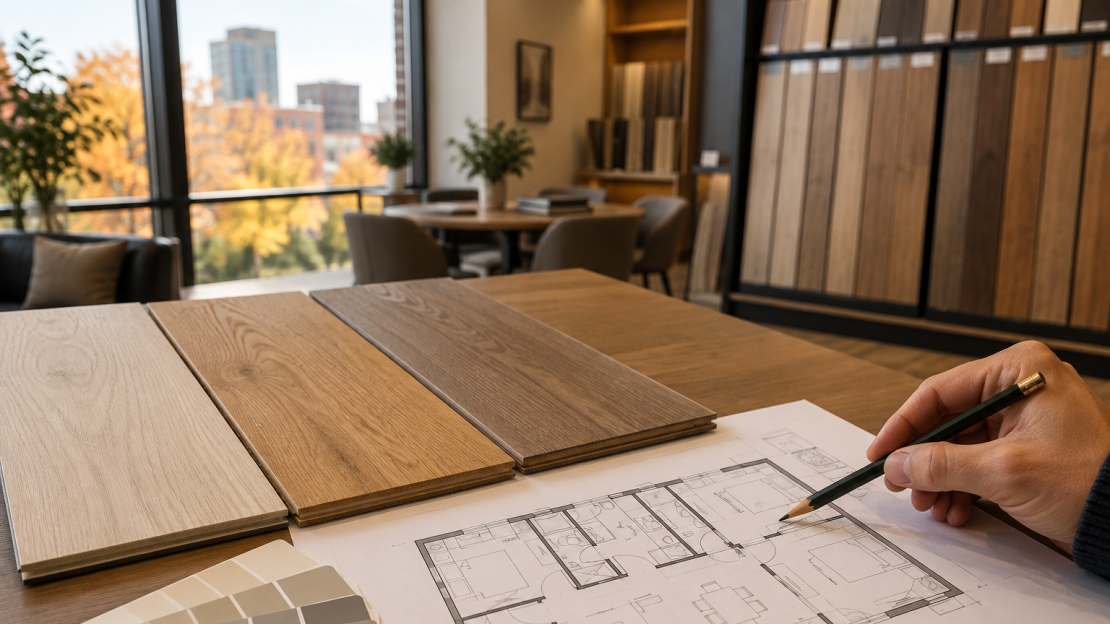
If the project has a model unit, it is easier to picture the final product and see the proposed finishes. In buildings built in several phases, you can sometimes also visit a unit identical to the one you are reserving.
The lease and its schedules: read every line
Unlike a buyer, a tenant does not sign a preliminary contract. What binds you is the lease and the documents attached to it. Take the time to read everything before signing.
Three points deserve particular attention:
- What is included. Appliances, parking, storage, access to common areas, heating, hot water, internet: each item should appear in the lease or a schedule. A verbal promise will be hard to enforce before the Tribunal administratif du logement (TAL), Quebec's housing tribunal.
- The move-in date. The landlord must hand over the unit on the agreed date, in good condition.
- The rent for the coming years. In a building five years old or less, the lease must state the maximum rent that can be charged during that period.
What you may be asked for before signing
During pre-leasing, the developer often has you fill out a reservation form and runs a credit check. What you should know: in Quebec, the landlord cannot require a security deposit, more than one month's rent in advance, or a deposit for the keys. Be wary of any request for a large payment to “reserve” a unit on plan.
Gross or net floor area?
Ask the developer: does the advertised floor area match the space you can actually live in? As in new construction generally, published measurements sometimes include the thickness of the walls, the closets and even the balcony. In a small unit, the gap is felt right away. Ask for both figures, and compare projects on the same basis.
Risks, but a relationship of trust
Renting on plan carries risks: a delayed delivery, common areas finished late, or promised services that are slow to open. A tenant has no construction warranty to protect them; what protects them is the lease.
Rest assured, though: in new rentals, what you are shown is, give or take, what will be delivered. In a condo for sale, the buyer chooses among several colours and materials; in a rental, the finishes are chosen once and for all and ordered from the start. Sam Scalia, president, CEO and founder of Les Propriétés Scalia, can vouch for it.
“In rentals, unlike condos, there's no choice of materials: it's one tile colour for every bathroom, whether you have 200 or 400 units,” he explains. “We reserve that quantity with the supplier at the very start of the project. It's almost impossible to run out, since there are no last-minute selections to wait for from tenants.”
Checking the developer's reliability
That said, the savings and the choice you get through pre-leasing are worth it once a relationship of trust is established with the developer. We will see further on how to check their reliability.
Renting during construction
Renting while the building is going up means watching it take shape before you sign. At this stage, the schedule becomes clearer and a model unit is often ready to visit: you get a much better sense of the finishes, the natural light and the ceiling height. On the other hand, custom choices remain rare in rentals, although some developers offer a few options in units that are not yet finished.
Whether you reserve on plan or during construction, it pays to follow the progress of the work and put your questions to the developer rather than waiting for the key handover: move-in date, state of the common areas, availability of parking and storage from day one.
Renting at delivery
Once the building is finished, there is nothing left to imagine: you visit the exact unit you will rent and can already enjoy the common areas. You can move in quickly, without fearing construction delays. On the other hand, the best units have often been taken, and the pre-leasing incentives become scarcer.
“What decided me was knowing I'd be the first to live there. Nothing damaged, nothing worn, everything included. Concrete also makes a huge difference: you don't hear the neighbours the way you do in an old apartment block, and the insulation meets current standards. And if a problem shows up, it comes from the construction, not from wear left by a previous tenant — so there are people there to fix it.”
— Simone A.
Summary: the advantages at each stage
| Stage | Advantages | Watch out for |
|---|---|---|
| On plan | more generous incentives (free months, parking or storage included); wider choice of units, floors and orientations; time to plan your move | you sign without seeing anything; uncertain move-in date |
| Under construction | more reliable schedule; model unit often open for visits; you can see the quality of workmanship | less generous incentives; fewer units to choose from |
| At delivery | you visit exactly what you are renting; quick move-in; common areas already open | the best units are often already rented |
Making your choice: time to compare
Before visiting anything, two questions arise: what rent can you afford, and which area would you rather live in? To answer them, list what matters day to day: distance to work, public transit, grocery store, school, parks, bike paths. Part of the scouting can be done from home, using Google Street View, virtual tours, transit maps and neighbourhood groups on social media, which can give a feel for life in the area.
Also find out what is coming around the building: shops on the way, new stations, vacant lots. A construction site next door can mean noise for two years, but also, by then, a café and a pharmacy just steps away.
Next comes the building: a large or small project? Number of floors, common areas, services, on-site management, pets allowed or not. Then the unit: number of bedrooms, orientation and light, net floor area, storage, washer and dryer, parking, accessibility (curbless shower, wide doors, elevator) and, above all, what the rent includes.
From one building to the next, heating, electricity, hot water, internet, parking and storage are sometimes included, sometimes billed on top. A higher rent that includes everything can therefore cost less than an attractive rent where every service is added to the bill. Put three buildings side by side in a table: the picture becomes clear.
“I'd advise not choosing a place only for the building. I'd walk around it for at least a good hour before making a decision. Because in the end, you don't just live in your condo, you live in your neighbourhood too.”
— Mélissa C.
How much does rent cost in a new building?
Let's start with the heart of the matter. In the new rental projects listed on Homz, the median starting rent is $1,600 a month for one bedroom, $2,058 for two bedrooms and $2,900 for three bedrooms (as of October 30, 2026). For comparison, Canada Mortgage and Housing Corporation (CMHC) puts the average rent for a two-bedroom unit in the Montreal area at $1,346, new and older units combined (survey conducted in octobre 2025).
The rents developers advertise are asking prices, before any negotiation, and they do not all cover the same things: of the 95 projects online, 27 list heating as included and 25 list electricity.
One last indicator to watch: the vacancy rate, which stands at 2.9% in the Montreal area according to the same survey. The higher it climbs, the more choice tenants have… and the more room to negotiate.
Renting a parking space: what you need to know
In most new rental projects, a parking space is rented separately. Rates vary widely from one project to another, but generally run between $100 and $300 a month. An indoor space usually costs more than an outdoor one, and the closer you get to downtown Montreal, the higher the bill. Remember to add this amount to the advertised rent when comparing two buildings: the difference can reverse the ranking.
Ask three questions before committing.
- Is the parking space written into the lease? This is the most important point. A space written into the lease is part of your rental: the landlord cannot take it away during the lease. To change it at renewal, they must send you a written notice that you can refuse, and the TAL then decides. A verbal agreement or a separately signed contract does not give you this protection.
- Indoor or outdoor? This is where comfort comes in. In winter, indoor parking spares you the shovelling and the windshield scraping, and your car starts better and ages better. It also means direct access by elevator, arms full of groceries. And in a central neighbourhood, it means not circling the block at night.
- Is there a charging station, or can one be installed? In a new building, the question comes up more and more, and the answer varies from one project to another.
What if you park on the street?
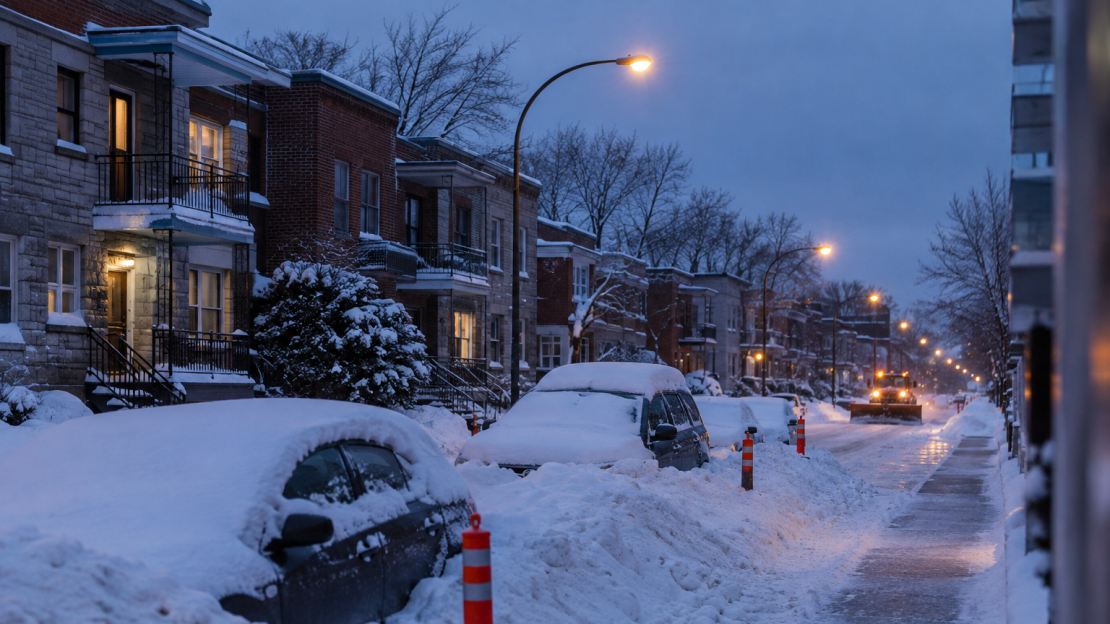
In Montreal, a residential parking permit costs about twenty dollars in Anjou, but several hundred in Le Plateau-Mont-Royal (September 2026 rates): check your borough's rate before assuming the street will cost you less than a space in the garage.
And what about your cat?
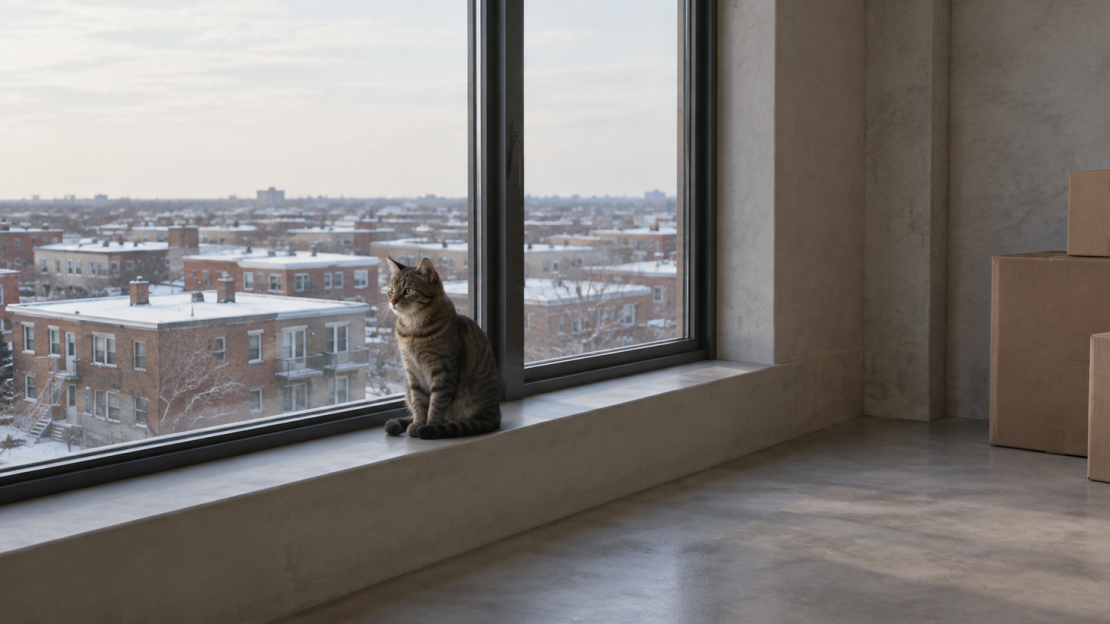
You may have heard that it is now forbidden to forbid pets. Not so fast. In Quebec, a clause in the lease or in the building's rules that prohibits pets remains valid. A 2026 decision of the TAL did strike down such a ban, finding it too absolute, but in a specific case: a tenant whose pet had a therapeutic benefit and caused no damage. That decision has been appealed; it is a file to watch. In the meantime, if Fido or Felix is part of the family, have it written in black and white in the lease that you are allowed to keep them. It is the only real guarantee.
From virtual to real
Polished photos, 3D renderings, virtual tours: on screen, a new building always looks good. But you will be living between walls, very real ones. While the building is still under construction, developers outdo themselves to help you picture it. “We set up a welcome area with very, very large prints to show visually what the spaces will look like,” says Magali Querini, marketing director at Claria, the developer of the Astoria, a rental project in Laval.
Ask to see the model unit, if there is one. Take measurements to make sure your furniture will fit, check the light, listen carefully to judge the soundproofing. Also ask what the structure is made of: a concrete building generally lets through less footstep noise than a wood-frame one. Have them specify the floor and exposure of your unit, too, since the model unit is not always yours. And don't forget the neighbourhood: an evening stroll says a lot about the atmosphere, and a trip at rush hour, about traffic and noise.
Questions to ask at the leasing office
Before going to the leasing office, prepare a list of questions or bring our comparison grid, ready to print at the end of this guide.
What percentage of the units is already rented?
Ask the leasing agent. You will find out whether there is still a choice (floor, exposure, size) and whether the developer is offering perks to fill the building, such as free months of rent. Many developers also list the units still available on their website.
When does construction start?
If the building is not built yet, also ask whether the developer has already obtained its permit from the city, and then from what date you will be able to live there. “People often forget to ask this question, then are disappointed to find out the project won't be livable for another year, for example!” says Maurizio Furnò, a real estate expert. Red tape, an urban planning advisory committee (comité consultatif d'urbanisme, or CCU) that is slow to approve: the permit sometimes takes a while, and so does your move. Better to know before you end your current lease.
Is the developer professional?
Are the documents they give you clear, detailed and error-free? Is it easy to get information from them? These are all signs of how serious they are. And can the leasing office staff answer your questions precisely? Their competence matters in building trust.
Don't sign too fast
Unless you truly fall in love with a place, avoid signing a lease on the first visit. That said, in a very popular area, good units sometimes go in a flash: if you know exactly what you are looking for, don't wait too long either.
Still, take the time to ask all your questions and read the whole lease, since it generally commits you for a year. If the building is not finished yet, don't rely only on what the agent says. They might tell you, for example: “The rooftop pool will be open soon.” The word “soon” is rather vague: how soon, exactly? Ask, and make sure the promised services are in the lease.
The checks before you sign
Before signing a lease, a few checks are in order. Here are the questions to ask yourself.
Questions about the landlord
Who will your landlord be (the person or company renting you the unit): the developer itself, or a management company it hands the building to? How long has it been in business? Does it own other rental buildings? Go see one of them and ask the tenants about maintenance, how fast repairs get done and the management's attitude: it often tells you more than any brochure. Online reviews can help you form an opinion, but they are easy to inflate or sabotage.
Want to dig deeper? Look up the landlord's or management company's name in the decisions of the TAL, available free of charge on the website of the Société québécoise d'information juridique (SOQUIJ), Quebec's legal information society. A few isolated disputes are nothing alarming for a large landlord, but a long list should set off alarm bells.
“Don't rely only on comments on the web. Do your research, and don't hesitate to ask the people who already live there, in the elevator for example, what they think of the place. Otherwise, things can turn into a nightmare. Unfortunately, that's what I went through.”
— Corinne B.
Insure yourself… and protect others
First apartment, first furniture, first Wi-Fi password of your own… and first home insurance policy. It is not the most exciting step, but it is one of the most important. First, know that the landlord's insurance covers the building, not what is inside it. If water damage ruins your sofa or a burglar walks off with your computer, it is your own insurance that will compensate you. And if a disaster forces you to leave the unit, it can also pay for temporary accommodation.
Above all, tenant insurance includes civil liability coverage, and that may be the most valuable part. Yet one tenant in three in Quebec has no home insurance, according to the Insurance Bureau of Canada. A bathtub that overflows and floods the neighbour below, a forgotten candle or a stove burner left on that starts a fire: if you are responsible, the bill will be sent to you, and in a new multi-storey building it can run to hundreds of thousands of dollars. Without insurance, a single moment of inattention can leave you in debt for years.

In fact, your landlord has the right to require you to be insured, as long as this is provided for in the lease at signing, notes the consumer magazine Protégez-Vous. For a small unit, the premium is generally modest. And if you share the unit, a single policy in the name of all the roommates often costs less than separate policies. Compare a few quotes, and consider bundling your home and car insurance for a discount.
The art of negotiation
Can rent be negotiated? In new buildings, more often than you might think. Every empty unit is lost income for the landlord, who will often prefer to grant a perk rather than see the unit stay vacant. The advertised price rarely moves, but everything around it is open to discussion, from free months to the move-in date. Do you value stability? Ask for a two-year lease at the same price: you will be sheltered from an increase the following year.
Sophie L. confirms it, with a caveat. Her advice: “ask for a longer lease,” she writes, so as to keep the same rent for two years, even if the increase often comes back in the end.
To improve your odds, do your homework. Compare the offers of a few nearby buildings, then don't hesitate to mention them: nothing like competition to loosen the purse strings. Choose your moment, too. During pre-leasing, as when only a few units are left to rent, landlords are generally more accommodating.
Even a rent increase can be discussed, which people don't always think is possible. Laurence P. knows something about that. Faced with an increase, she didn't give up: “I looked into my rights.” Then, armed with that information: “I negotiated it down.”
“Sign here”
No need to pick apart a twenty-page in-house contract: in Quebec, every residential lease uses the same form, the TAL's, available in French and English. If the landlord hands you another document, ask for the official form. Additional agreements (parking, free months, appliances) are added in a schedule or in the sections provided for them.
Before signing, also insist on getting the building's rules. They are an integral part of the lease, and the landlord must give them to you before signing. In a new building, they often govern many aspects of your daily life: pets, booking the common areas, noise, deliveries, visitor parking. Better to know what you are committing to. Once the lease is signed, the landlord has ten days to give you a copy.
Also know that some clauses have no value, even if you signed them: one that would forbid you from subletting or assigning your lease, for example, or that would require payment of all the remaining rent after a single late payment. When in doubt, the TAL offers a free information service, by appointment.
Finally, you don't have to disclose everything. The landlord can check your creditworthiness, with your consent, but cannot ask for your social insurance number or how much you earn. Questions about your marital status or your plans to have children are also prohibited, since they are discriminatory.
So how do you prove you can pay? With your consent, the landlord can run a credit check or call your former landlords. You can also hand over a reference letter from a former landlord, or a credit certificate from your financial institution. No credit history yet? Proof of income or savings, provided of your own free will, can make the difference.
The financial side
The rent for the first five years. This is the most important rule to know in new construction. For the five years after the building is constructed, the TAL does not control rent increases: you can neither ask it to set your rent nor contest an increase. If you refuse the increase requested, you will have to move out at the end of your lease.
In return, since February 21, 2024, the landlord must enter in section F of the lease the maximum rent it may charge during those five years. An example: you pay $1,800 a month, and section F shows a maximum of $2,100. By the end of the fifth year, your rent may rise to $2,100, but no further. And if the landlord has entered nothing in section F, the exception does not apply: you can refuse an increase and keep your home, as in any other building.
So read that section carefully: it tells you what to expect for the coming years. Same vigilance if you are offered free months: make sure the lease states the regular rent, how long the promotion lasts and what happens if you leave or assign your lease before it ends.
Taxes. Residential rent is subject to neither GST nor QST, and parking rented with your apartment is generally exempt as well. On the other hand, services billed separately, such as an extra storage locker, access to a charging station or certain service fees, may be taxable. Ask for a breakdown of the fees before committing.
Assistance programs. Housing assistance mainly targets low-income households and remains rare in new rentals. A few avenues are still worth a look. Some recent buildings include affordable units, offered at capped prices thanks to public funding; your city's municipal housing bureau (office municipal d'habitation) can point you in the right direction. If you dream of buying one day, the First Home Savings Account (FHSA) is open to tenants and already lets you save tax-free toward a first home. Finally, keep the RL-31 slip your landlord must give you by February 28: it is used to claim the solidarity tax credit.
What if the unit isn't ready?
On a construction site, the delivery date is sometimes more wishful thinking than firm promise. Before telling your current landlord you are leaving, check on the progress of the work and plan a fallback, such as a stay with family or temporary housing. Unlike the buyer of a new home, a tenant has no construction warranty to cover relocation costs. Keep your receipts for accommodation, storage and moving: they will support your claim before the TAL, if it comes to that. Depending on the case, the TAL can award you damages, a rent reduction or the cancellation of the lease. Above all, don't withhold your rent on your own. A reduction must be granted by the TAL or agreed in writing with the landlord. Some leases also spell out what happens in case of delay, for example suspending the rent until the keys are handed over. Read that clause before signing.
Taking possession and the first months
On the day you take possession, walk through the unit with the landlord's representative and note every defect in writing, even minor ones, with photos. This inspection report, signed by both parties and attached to the lease, prevents many arguments when you move out. It is not mandatory, but it protects you. And if you have a friend with an eye for these things, bring them along: two people always see more.
Moving day
Moving into a new building takes planning. In a triplex, you park the truck at the door, order pizza and recruit the in-laws. In a new tower, you first have to book the elevator. A quick call to management a few days ahead is enough, and the loading dock, if there is one, can be reserved at the same time. Moves are often by appointment, and the elevator is padded for the occasion. Warn your movers: a truck waiting its turn is billed by the hour.

Think about utilities too, so that your first evening is spent in front of your favourite series rather than a box of cables. Open your Hydro-Québec account for moving day, unless electricity is included in the rent. Book internet early: in a new building, sometimes only one provider is installed, or the others don't recognize the address yet. The leasing office can tell you. Finally, the Service québécois de changement d'adresse, Quebec's change-of-address service, notifies several government departments and public bodies in a single step.
Once you are there, collect your keys, your access fobs and your intercom code. And your home insurance must cover your new unit from the first day.
Reporting deficiencies
Other defects only show up with use, often during the first winter: a window that lets in the cold, noisy ventilation, a drain that empties slowly. As soon as you notice a significant defect, you must notify the landlord within a reasonable time. Do it in writing, by email or through the building's management portal, and keep a record of the date. Béatrice G., who had to argue her case before the TAL, sticks to the rule: “My most important advice is to do everything by email, or at least by text.” If nothing happens, a formal notice usually comes before a claim to the Tribunal administratif du logement.
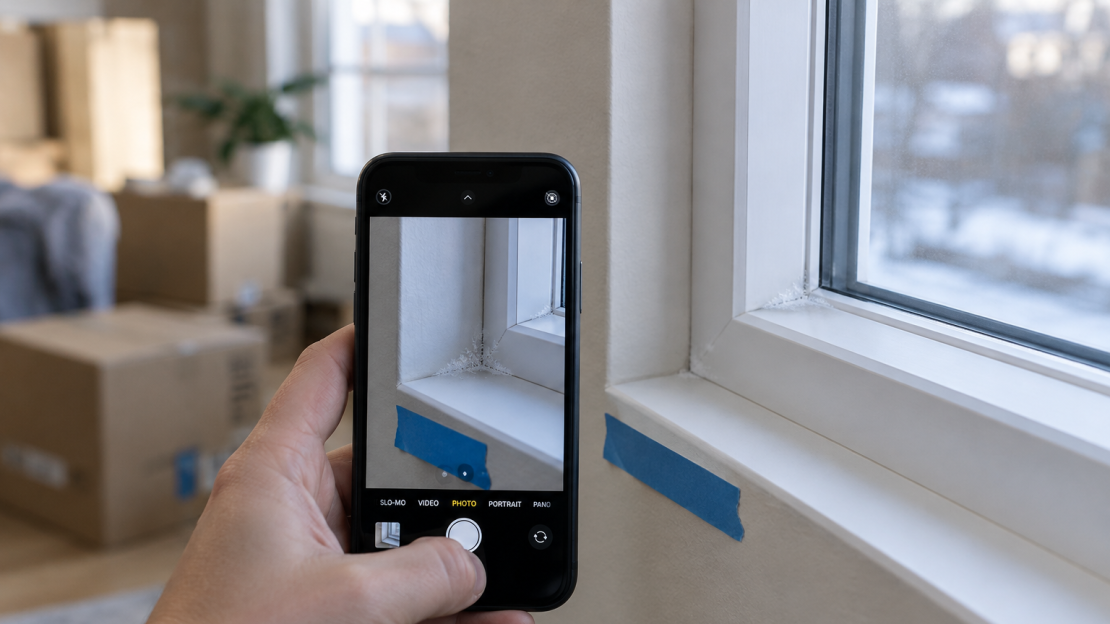
“No police officer is going to come and confirm that the landlord didn't do the work. It's up to you to look up your rights, gather all your evidence, build a case.”
— Béatrice G.
To build hers, Béatrice found an unexpected ally: “I also prepared with artificial intelligence before going to the housing tribunal.”
In a new building, contractors often come back to fix deficiencies during the first year, in the apartments as well as in the common areas. Except in an emergency, the landlord must give you at least 24 hours' notice before entering your home to do repairs, which must be done between 7 a.m. and 7 p.m. For major work, written notice of at least 10 days is required, or three months if you have to leave the unit for more than a week. If this work causes you significant inconvenience, the TAL may, depending on the circumstances, grant you a rent reduction. And if you have to stay elsewhere during the work, the landlord must pay you an indemnity to cover your reasonable expenses.
Assigning your lease: leaving for good
A job offer in Quebec City, a crush that has you moving in with the love of your life, a baby on the way and a one-bedroom shrinking before your eyes… Life sometimes has other plans than your 12-month lease. Good news: you are not condemned to pay for an empty unit until it ends. Two solutions are open to you: assigning the lease and subletting. And a lease clause that would forbid you from doing either has no value.
Assigning your lease means transferring it to another person, who takes your place for good, on the same terms. The landlord can refuse, but depending on their reason, the refusal either holds you or frees you. You must first notify your landlord in writing, giving the name and address of the person who will replace you. The TAL even offers a model letter on its website. The landlord then has 15 days to respond. If they don't respond, it is as if they had accepted.
If they refuse for a serious reason, such as a candidate unable to pay the rent, your lease continues. Since 2024, they can also refuse without a serious reason, but the lease then ends on the date set for the assignment: the landlord takes back the unit, and you are free to leave. In new buildings, this is plausible, since a landlord may prefer to re-rent the unit for more. In short, three possible outcomes: your replacement takes over, you stay, or you pack your bags. Either way, you will know where you stand.
Once the assignment is accepted, you have no further obligations to the landlord. Your replacement inherits the lease as is, with the same rent and the same ceiling written in section F. And no, you cannot ask them for a “premium” for leaving them your lovely condo with a river view: the law forbids it. For their part, the landlord can only be reimbursed for the reasonable expenses related to the assignment.
Subletting: leaving without really leaving
Assigning is for leaving for good. If you plan to come back, after a six-month internship in Vancouver or a sabbatical year in Asia, subletting is probably the better fit. You rent your unit to someone else for a set period, while remaining the tenant.
The process is the same as for an assignment, with written notice to the landlord and a 15-day response period. The TAL offers a model letter for this case as well. Here too, no answer means yes. The difference is that the landlord can only refuse for a serious reason.
Subletting carries more risk for you, though, since you remain responsible to the landlord: if your subtenant stops paying or damages the place, the landlord will turn to you. So choose the person carefully and put your terms in a signed agreement. Also know that the sublease ends at the same time as your lease. Your subtenant will therefore have no right to stay on.
“Before subletting, I always require a credit check, with the person's consent, of course. I also walk through the apartment with them and photograph everything before handing over the keys. And I'll admit it, I do a bit of stalking on their social media profiles! You learn a lot about someone in a few clicks.”
— Carolanne L.
What about Airbnb?
Thinking of renting your condo to tourists for a few nights while you are on vacation? That is also subletting: you need your landlord's consent. And that's not all. In Quebec, every tourist accommodation listing must display a valid registration number, and many municipalities strictly regulate the practice. Your building's rules may also forbid it. Find out before you start, because the fines can be steep.
Renewing your lease or leaving
Is your lease coming to an end? If nobody does anything, it renews automatically, on the same terms. A landlord who wants to raise the rent or change another condition must send you a written notice between three and six months before the end of a 12-month lease. You then have one month from receiving it to respond. Careful: if you don't respond, it is as if you had accepted the increase.
You have three possible answers: accept, refuse the change while staying, or announce that you are leaving. If you refuse, the landlord has one month to ask the TAL to set the rent; otherwise, your lease is renewed at the same price. In a building five years old or less, it is different: refusing the increase means having to leave at the end of the lease. Fortunately, your lease states the maximum rent the landlord can charge during those five years. So you know in advance what to expect.
Want to leave at the end of your lease? Notify your landlord in writing, between three and six months before the end of a 12-month lease. The TAL offers a model notice on its website; keep proof that you sent it. Before handing back the keys, walk through the unit with the landlord, just as on the day you arrived.
Conclusion
Renting a new condo means enjoying the comfort and quality of modern construction, without the commitment that buying a home requires. You still have to prepare well. From choosing the building to reading the lease, through negotiation and moving in, every step counts. Well informed, you will sign without unpleasant surprises and fully enjoy your new home.
“For me, it's really the whole package that makes the difference: a comfortable home, services that make life easier, common areas you can actually enjoy and, above all, a neighbourhood where you feel good.”
— Mélissa C.
To go further, visit the Homz blog, where our journalists cover news about new rentals. And when you are ready to go from tenant to owner, our guide “A complete, worry-free guide to buying your new home” will be there for you. A question about this guide or an idea for an article? Write to us.
Appendix: your comparison grid
Print this grid and bring it to every visit. One row per question, one column per building: by the third, you will see clearly.
| Question | Building 1 | Building 2 | Building 3 |
|---|---|---|---|
| The rent and what it includes | |||
| Advertised monthly rent | |||
| Maximum rent entered in section F of the lease | |||
| Heating, electricity, hot water, internet: included or extra? | |||
| Parking: monthly price, indoor or outdoor? | |||
| Storage: included or extra? | |||
| Incentives offered (free months, parking, etc.) | |||
| Total monthly cost | |||
| The unit | |||
| Number of bedrooms and net floor area | |||
| Floor, orientation, light | |||
| Appliances and washer-dryer included? | |||
| Soundproofing; concrete or wood structure? | |||
| Accessibility: curbless shower, wide doors, elevator | |||
| The building | |||
| Expected move-in date | |||
| Common areas and services offered | |||
| Cleanliness and upkeep of the building | |||
| Pets allowed? | |||
| On-site management? | |||
| Does the building suit you? (neighbours, atmosphere, activities) | |||
| The landlord and the neighbourhood | |||
| Landlord's reputation (other buildings, tenant reviews) | |||
| Disputes before the TAL | |||
| Easy parking on nearby streets? | |||
| Your impressions of the neighbourhood: transit, shops, atmosphere |
References
The lease rules cited in this guide come from the pages of the Tribunal administratif du logement, consulted on October 13, 2026.
Novoclimat, Government of Quebec (energy savings, comfort and air quality):
- Novoclimat program benefits: quebec.ca/en/housing-territory/heating-energy-consumption/novoclimat-financial-assistance/program-benefits
Tribunal administratif du logement (TAL):
- Paying the rent (no more than one month's rent in advance): tal.gouv.qc.ca/en/being-a-lessee/paying-the-rent
- No security deposit and no key deposit (in French): tal.gouv.qc.ca/fr/etre-locataire/paiement-du-loyer
- Search for a TAL decision: tal.gouv.qc.ca/en/decision/search-for-a-decision
- What is a lease (the mandatory form): tal.gouv.qc.ca/en/signing-a-lease/what-is-a-lease
- Leases and protection of personal information: tal.gouv.qc.ca/en/signing-a-lease/leases-and-protection-of-personal-information
- FAQs (buildings five years old or less): tal.gouv.qc.ca/en/faqs
- Section F of the lease (in French): tal.gouv.qc.ca/fr/questions-frequentes
- Formal notice: tal.gouv.qc.ca/en/the-dwelling/formal-notice
- Access to the dwelling and visiting rights (24 hours' notice, repairs between 7 a.m. and 7 p.m.): tal.gouv.qc.ca/en/the-dwelling/access-to-the-dwelling-and-visiting-rights
- Major work (10 days' notice, or three months if you must leave for more than a week): tal.gouv.qc.ca/en/the-dwelling/major-work
- Assignment of lease agreement and notice to sublet (15-day response period, model letters): tal.gouv.qc.ca/en/assignment-of-a-lease-or-subleasing/assignment-of-lease-agreement-and-notice-to-sublet-the-dwelling
- Find a notice model: tal.gouv.qc.ca/en/models-of-notices/find-a-notice-model
Tenant home insurance:
- “One tenant in three in Quebec has no home insurance,” according to the Insurance Bureau of Canada, cited by the Chambre de l'assurance de dommages (press release of June 10, 2026, in French): chad.ca/wp-content/uploads/2026/06/cp-locataire-demenagement-cdla.pdf